
You’ll find the 2003 Saab 9-3 presents the most significant problems, with widespread electrical failures from faulty wiring looms, HVAC system malfunctions, and premature timing chain tensioner failures. The 2005-2007 models also show notable issues including intake valve wear, balance shaft tensioner failures, and coolant leaks from chain-driven water pumps. Earlier 1998-2002 models carry higher failure rates compounded by rust and corrosion. The 2008-2011 generation inherited these weaknesses without major redesigns. Understanding these specific vulnerabilities helps you make informed decisions about maintenance priorities and ownership costs.
The Troubled 2003 Model Year and Its First-Generation Flaws
The 2003 Saab 9-3 represents a cautionary case study in first-year model reliability, as the inaugural year of its generation introduced systematic flaws across electrical, mechanical, and interior components. You’ll encounter widespread electrical malfunctions stemming from faulty wiring looms and connectors—affecting radios, steering wheel controls, and moonroof operations. The HVAC system‘s plastic recirculation motor gears fail predictably, producing characteristic clicking noises. Timing chain tensioner deficiencies in both V6 and 2.0L engines create rattling sounds and potential catastrophic damage without proper maintenance protocols. These 2003 issues compound after warranty expiration, generating substantial repair costs that greatly impact Saab reliability perceptions. The combination of immature design elements, vulnerable plastic components, and complex electronic systems makes this model year particularly problematic for prospective buyers seeking dependable transportation. Interior controls suffer from degrading rubberized coatings that warp and peel, requiring eventual replacement of affected buttons and switches.
Mechanical Headaches in the 2005-2007 Model Years
While the 2003 model year established Saab 9-3’s reliability concerns, the 2005-2007 generation compounds these problems with distinct mechanical vulnerabilities that compromise engine longevity and drivability.
Valve wear mainly affects intake valve seat faces in 2007 models, causing compression loss that manifests as cold-start difficulties—particularly in higher-mileage vehicles. You’ll find the engine runs normally once warmed. Problems with intake valves on 2007-2009 models can lead to starting difficulties.
Balance shaft tensioner failures create ticking noises when plastic guides deteriorate, risking timing chain derailment and catastrophic engine damage. Coolant leaks stem from chain-driven water pump design flaws, allowing cross-contamination between lubrication and cooling systems that trigger overheating.
You’ll also encounter transmission shifting difficulties, ABS warning light activation from faulty sensors, and suspension issues including bulkhead mount clicking and strut degradation. These mechanical failures demand complex repairs with significant labor costs.

COMPATIBILITY – Fits 2005-2007 Chevrolet Cobalt; 2004-2007 Saturn Ion; 2010-2011 Saab 9-3X; 2003-2011 Saab 9-3; 2011-2011 Saab 9-5

[Vehicle Fitment]: A-Premium valve cover gaskets are compatible with Saab 900 1985 (from Engine Serial # G110406, DOHC), 900 1986-1988 (VIN: D 8-Valve, VIN: D 16-Valve, VIN: L 16-Valve), 900 1989-1998, 900 1991-1994, 900 1994-1998, 9000 1986-1990, 9000 1990-1994 (B234I, VIN: B), 9000 1991-1998, 9-3 1999-2003, 9-5 1999-2009
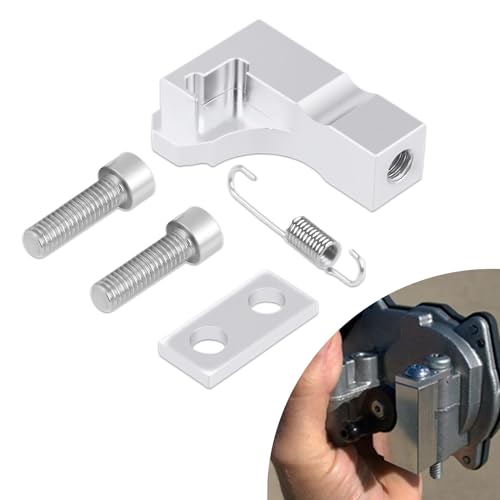
Compatibility: The P2015 engine intake manifold repair bracket replacement part number is 03L129711E 03L129711AG 03L129086, suitable for other models such as Audi and Skoda. Please carefully check the OEM part number and compatible models before purchasing to ensure is compatible with your vehicle
Understanding 2008 Saab 9-3 Cold Start and Rust Issues
Although the 2008 Saab 9-3 emerged after the mechanically troubled 2005-2007 generation, it introduces distinct reliability concerns centered on cold start failures and accelerated corrosion. You’ll encounter prolonged cranking exceeding 10 seconds after the vehicle sits 5-6 hours, primarily caused by fuel pump check valve failure preventing proper fuel system priming. The diesel TTiD variants exhibit rough idling for 30-40 seconds post-ignition, smoothing only after thermal stabilization. Effective cold start remedies include replacing the fuel pump check valve and verifying crank angle sensor operation. Battery voltage can drop to 7 volts during starting, necessitating immediate replacement to ensure adequate cranking power. Concurrently, you’re facing rust development in wheel arches, sills, and rear panels—areas requiring systematic rust prevention through regular undercarriage treatment and corrosion inhibitor application. Combined degradation impacts electrical connections affecting cold start sensors while compromising structural integrity, demanding proactive maintenance protocols.
Timing Chain Tensioner Failures Across Multiple Years
Timing chain tensioner failures plague Saab 9-3 models across multiple production years, with documented incidents spanning from 2001 through 2011 stemming primarily from oil maintenance lapses rather than inherent design flaws. You’ll encounter tensioner wear most frequently in vehicles exceeding 110,000 miles, though some 2003 1.8T engines experienced balance chain guide disintegration at just 34,000 miles. Poor oil maintenance accelerates failure through sludge accumulation and degraded lubrication properties.
Replacement costs range from $479 to $560 for most models, increasing to $734–$939 for 2011 variants due to labor complexity. You’ll recognize tensioner problems through rattling noises at high RPMs or after warming, requiring oil pan inspection for definitive diagnosis. The tensioner’s aging spring progressively weakens over time, diminishing its ability to maintain proper chain tension even under normal operating conditions. While chains typically last 100,000–150,000 miles, independent mechanics recommend proactive replacement around 120,000 miles to prevent catastrophic engine damage.


Fits: Please confirm this item fits for your vehicle (Check Fitment Data Above or see description below)

[Vehicle Fitment-1]: ①Compatible with Buick Allure 2010 // LaCrosse 2010-2016 // Regal 2011-2013 L4 2.0L // Regal 2011-2017 // Verano 2013-2016 L4 2.0L/2012-2017 L4 2.4 ②Compatible with Chevrolet Captiva Sport 2012-2015 // Cavalier 2002-2005 L4 2.2L // Classic 2004-2005 L4 2.2L // Cobalt 2008-2010 L4 2.0L // Cobalt 2005-2010 L4 2.2L // Cobalt 2006-2008 // Equinox 2010-2017 // HHR 2008-2010 L4 2.0L // HHR 2006-2011 L4 2.2L/2.4L // Impala 2014
HVAC and Electrical System Weaknesses by Model Year
HVAC and electrical system failures represent the second-most persistent reliability concern across Saab 9-3 model years, with refrigerant leaks and climate control module malfunctions affecting vehicles from 1998 through 2011.
Early generations (1998–2002) suffer from compressor clutch failures and wiring harness degradation. Facelift models (2003–2007) exhibit electrical system correlation between Fuse 13 failures and complete A/C shutdown. Final-generation units (2008–2011) carry over many weaknesses without significant redesign.
Refrigerant leaks dominate across all years, requiring evacuation and recharge. Electrical faults in relays, control modules, and body computers cause intermittent operation. HVAC troubleshooting techniques involve pressure gauge testing, visual fuse inspection, and compressor clutch engagement verification. Sensor and pressure switch failures trigger protective shutdowns. A malfunctioning temperature sender can prevent the compressor from engaging despite all other components operating correctly. Underlying electrical issues must be resolved before recharging refrigerant to prevent recurrence.
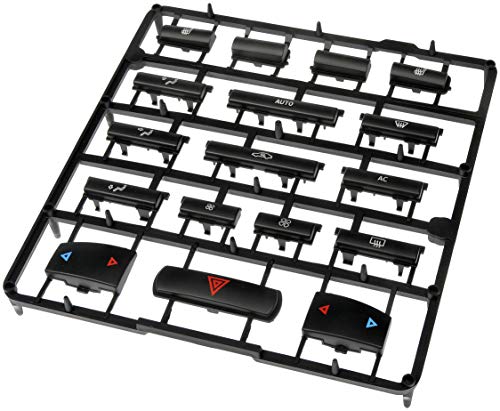
Ideal solution - this HVAC push button set restores the appearance of damaged, unreadable, or missing climate control buttons
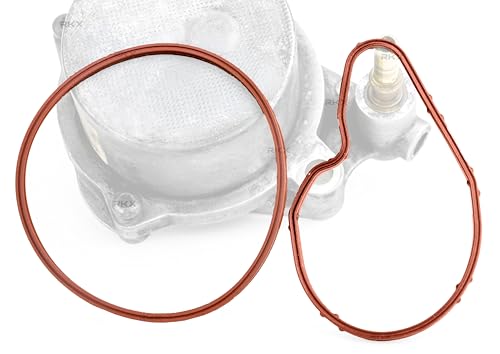
RKX vacuum pump reseal kit Compatible with SAAB 2.0L turbo engines.

[Superior Materials]: The valve core removal tool is crafted from high-quality aluminum and brass, offering impact resistance, rust prevention, and wear resistance, making it durable and providing reliable protection for your automotive air conditioning system.
Steering and Bulkhead Problems That Plague Certain Years
Steering system failures and bulkhead wiring corrosion compound reliability concerns across Saab 9-3 model years 2002–2011, with universal joint wear and ABS sensor harness degradation representing critical safety defects. You’ll encounter compromised steering reliability through worn universal joints producing excessive column play, particularly affecting pre-2010 models. The 2008 model year exhibits severe cold-start steering seizure requiring substantial input force. Rack damage from road impacts further deteriorates directional control.
Bulkhead corrosion manifests through moisture-induced wire harness deterioration affecting front wheel speed sensors, triggering ABS and traction control failures. This wiring degradation originates within the bulkhead’s moisture-prone environment, necessitating complete module replacement for proper braking system restoration. These combined steering and bulkhead defects greatly compromise vehicle control on adverse road surfaces, demanding immediate corrective action to maintain safe operation. Corroded wire harness connectors in the front wheel sensors can lead to potential control loss on slippery roads, exacerbating the severity of these safety-critical failures.

Power Steering Pump Seal Kit

Fits the power steering pump for the Saab 9-3 2006-2011 V6. Offers a precise fit to seamlessly integrate with your power steering pump assembly and help restore the original performance of your vehicle’s steering.

Kit Includes: 2 Front Strut & Spring Assemblies; 2 Rear Shock Absorbers
Comparing Repair Costs and Reliability Across Model Years
When evaluating ownership economics, repair cost data reveals significant disparities across Saab 9-3 generations, with annual maintenance averaging $526 but fluctuating dramatically based on model year defects.
The 2001 model exemplifies high-cost ownership, requiring expensive repairs for systemic failures. Earlier 1998-2002 variants compound repair expenses through rust remediation and structural corrosion issues. Conversely, the 2006 model demonstrates lower maintenance costs correlating with its improved reliability ratings of 4.0 out of 5.0.
Major component replacements—engines and transmissions—create cost spikes exceeding routine maintenance budgets. You’ll find the 2003-2011 generation presents variable repair expenses depending on specific year selection. Four-cylinder engine configurations provide more accessible repair work compared to larger powertrains, potentially reducing labor costs. Insurance premiums and parts availability further influence total ownership costs. The 2002 hatchback variant consistently shows ideal cost-to-reliability ratios, making it the most economically sound choice.


Saab 9-3 models from 2003- through 2015.

【Perfect OEM Replacement – 4493433】 Direct-fit replacement for OEM part #4493433. Compatible with Saab 9-3, 9-5, 900, and Volvo 850, S70, V70 power window regulators. Designed for both front and rear windows.