
You’ll want to avoid Hyundai Accent models from 2000-2004, which suffer from severe powertrain defects, and the fourth generation (2010-2014) with documented transmission failures and brake malfunctions. The 2002 model stands out for engine stall issues averaging $3,500 in repairs, while 2016 models face costly oil leak problems around $5,200. The 2017 model year also shows significant brake master cylinder and trunk mechanism issues. Understanding these trouble spots can help protect your investment.
The Most Problematic Years at a Glance
Three distinct periods stand out as particularly problematic for the Hyundai Accent: the early 2000s (2000-2004), the fourth generation (2010-2014), and the 2017 model year.
In the early 2000s, you’ll find severe powertrain defects, with the 2002 model showing the worst problematic features including engine stalling and transmission failures. The National Highway Traffic Safety Administration reported 143 overall complaints for the 2002 model. The fourth generation’s long-term reliability suffered from widespread transmission issues, particularly in the 2013 model, along with brake switch failures and airbag malfunctions. While the 2017 model showed overall improvement, it experienced specific issues with brake master cylinders and trunk mechanisms. The most consistent trouble spots across these problematic years include transmission failures, engine problems, and brake system defects, with repair costs often exceeding $3,500 for major powertrain repairs.
Engine Issues by Model Year
While the Hyundai Accent has maintained a reputation for affordability, specific model years exhibited severe engine-related defects that owners should carefully consider.
You’ll find the 2002 model particularly troublesome, with engine stall issues and repair costs reaching $3,500. The 2016 model year stands out for excessive oil leaks and consumption problems, requiring repairs averaging $5,200 at around 111,000 miles. Engine overheating often accompanied these issues, leading to premature wear. The 2013 model year experienced the highest volume of reported problems across all categories.
The 2011-2015 models faced persistent sensor failures, particularly with throttle position sensors and VVT solenoids. You’ll want to watch for engine warning lights in 2011 models, as they frequently indicated serious underlying problems. Pre-2010 models, especially 2002 and 2004, suffered from stalling issues and significant oil consumption at surprisingly low mileages.

THIS KIT INCLUDES: Engine Cylinder Head Gasket Set with Head Bolt Kit

Reliable Direcly replacement - Engine Motor Mount and Automatic Transmission Mount have undergone extensive quality and safety performance testing, use the higher quality of raw materials to ensure the mount will meet or exceed your original mount's specifications

THIS KIT INCLUDES: Engine Cylinder Head Gasket Set with Head Bolt Kit
Transmission Problems and Warning Signs
Among Hyundai Accent’s most severe mechanical issues, the 2004 model’s transmission failures stand out as particularly troublesome, with owners reporting persistent gear slipping and clunking noises during shifts. You’ll notice several transmission symptoms that indicate potential failure: delayed gear engagement, grinding sounds during shifts, and inability to change gears properly. These issues often stem from contaminated transmission fluid, faulty shift cables, or malfunctioning sensors.
If you’re experiencing these problems, expect repair costs ranging from $1,800 to $3,400 for a full transmission replacement. While checking and replacing transmission fluid might temporarily help, many owners end up needing complete transmission overhauls. Watch for warning signs across other problematic years (2002-2016), as similar transmission issues plague multiple Accent generations. The Best Subcompact Car award winner shows that newer models have largely overcome these transmission concerns, making them a more reliable choice for budget-conscious buyers.

[Reference Part Number]: 0440450, 48148-2H000, 481482H000
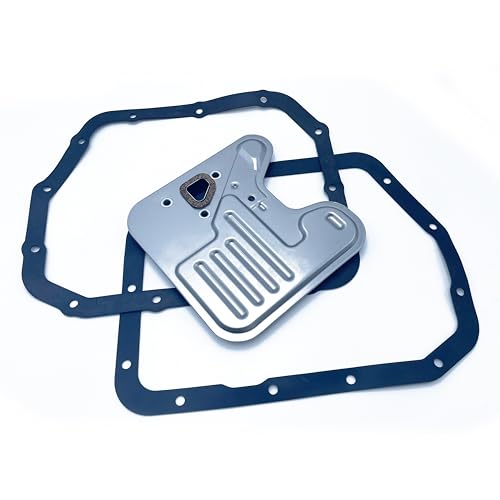
[Function]Use the transmission filter kit to filter the oil and remove debris from the transmission oil.Keep transmission fluid clean to prevent components from clogging.Make your car run more stable.Compatible with F4A32 transmission filter Kit. Bolts 13

[Trans Code:] A4Bf3 1999-On Km 170 Series, A4Af1, F4A32A, F4A-32-A, W4A32A 2000-On (Accent 2000-2003, Elan-Tra 2000, Tiburon 6/1999-2001) Pan Bolts 13 Compatible With Hyundai Compatible With Kia
Safety Recalls and Critical Defects
Major safety recalls have plagued multiple generations of the Hyundai Accent, with critical defects affecting brake systems, seat belt components, and steering assemblies. You’ll find serious safety concerns in 2006-2009 models due to faulty brake light switches that can fail to illuminate when braking. The 2020-2022 models face dangerous seat belt pretensioner issues that could explode and project metal fragments into the cabin.
The recall history reveals steering column bolt defects in 2021-2022 models that could cause complete steering loss. The 2007 model year particularly stands out with multiple investigations into brake lights, cruise control, and transmission problems. Additionally, some Accent years are affected by engine manufacturing defects that can lead to stalling and potential fires. The 2015 model year requires owners to replace the ABS module fuse due to potential brake fluid leaks that could cause electrical shorts and fires.

🚍【Pre-Purchase Note】 Please confirm the year, model, brake pedal switch size and type of your vehicle by owner's manual or actual measurement for proper fitment. Double check with the applicable model information and Amazon Fitment provided by us to confirm that there is no error before placing your order to avoid not being able to use it after purchase.

【Practical Function】This brake light switch stopper can replace brake lights when they malfunction or remain on for extended periods without replacing the brake lights themselves. It ensures your brake lights illuminate and extinguish normally, perfectly replacing worn or damaged brake light switches. This is an essential automotive accessory

Packag Included: The package includes 4 pieces of brake light switch stoppers, sufficient quantity to meet your daily requirements for usage and replacement, you can also share them with your friends and family.
Cost Analysis of Common Repairs
The cost breakdown of Hyundai Accent repairs reveals a surprisingly economical ownership experience, with annual maintenance averaging $444 – lower than both the subcompact segment’s $456 and the industry-wide $652 average. With an impressive reliability rating of 4.5, the Accent demonstrates exceptional value among subcompact cars.
You’ll need to budget strategically as your Accent ages, with repair frequency increasing markedly after the 7-8 year mark. Early maintenance costs start around $304 in year one but can exceed $1,000 by year ten. Major service intervals include timing belt replacement at 60,000-70,000 miles and fluid changes between 50,000-100,000 miles. Your maintenance budget should account for routine 6,000-7,500 mile services including synthetic oil changes, tire rotations, and inspections. While transmission and exhaust repairs become more likely after 100,000 miles, adhering to regular maintenance schedules greatly reduces your risk of costly repairs.
Best and Worst Model Years Compared
While maintenance costs paint part of the ownership picture, specific model years of the Hyundai Accent present vastly different reliability profiles. You’ll want to avoid the 2011 model year, which stands out as the worst due to frequent engine failures and sudden shutdowns. The 2002-2004 and 2009-2014 models also demonstrate significant powertrain issues and transmission problems, garnering negative consumer feedback. Owners report that costly repair bills often accompany these problematic model years.
In contrast, models from 2018 onward have earned more positive reviews thanks to improved drivetrain engineering and fewer electrical issues. These later versions benefit from enhanced quality control and updated powertrains. When shopping for a used Accent, you’ll find the most reliable options in recent model years, particularly those manufactured after 2018, which show marked improvements in overall dependability and performance.

Reference Numbers: 13063


The Product: Made of high-strength metal materials with sturdy plastic housing, help solve problems such as failure to unlock the door lock, failure to open, abnormal noise, etc., restore the door latch to proper operation
Reliability Ratings and Consumer Reports
Consumer Reports reliability data reveals critical insights into the Hyundai Accent’s performance across multiple trouble spots, drawing from extensive subscriber surveys tracking serious mechanical, electrical, and safety-related issues.
The most notable reliability trends emerge from 2020 model data, where electrical system malfunctions have caused towing incidents for some owners. Important seat belt pretensioner issues have triggered widespread recalls for 2020-2022 Accent models. While you’ll find strong fuel economy and general mechanical dependability praised across model years, Consumer Reports’ sample sizes of 200-400 vehicles per year highlight specific concerns. Their 17-point reliability assessment shows the 2020-2022 models maintaining expected reliability benchmarks, though electrical system issues persist in owner feedback. Survey data indicates no systemic failures or widespread mechanical problems, with the manufacturer’s warranty coverage helping offset potential repair expenses.
Maintenance Tips for Known Issues
Maintaining your Hyundai Accent requires specific attention to documented mechanical vulnerabilities. Regular boot seal maintenance prevents water ingress and subsequent mold formation in carpets, while proper ignition coil care helps avoid engine management light triggers and performance issues. Early detection of wing mirror rust through regular inspections can prevent extensive bodywork repairs later.
You’ll need to monitor window regulators for sluggish operation and replace them promptly when failing. Protect your vehicle’s wiring from rodent damage by parking in enclosed spaces and installing protective conduits. For transmission reliability, watch for gear engagement problems and address transmission range sensor faults immediately, particularly when reverse gear becomes difficult to engage. Stay vigilant with inspections, use compatible replacement parts, and maintain scheduled service intervals to maximize your Accent’s longevity and prevent costly repairs.

Fitment: Compatible with 2012-2017 Hyundai Accent L4 1.6L, 2012-2017 Veloster L4 1.6L, 2012-2017 Kia Rio L4 1.6L,2012-2016 Kia Soul L4 1.6L.

Premium-Grade, Durable & Corrosion-Resistant Materials Core sealing components made of NBR (Nitrile Rubber) and HNBR (Hydrogenated Nitrile Rubber), offering strong resistance to R134a/R1234yf refrigerants and refrigeration oil—ensuring longer service life!

COMPATIBILITY – Fits 2006-2011 Kia Rio; 2006-2011 Kia Rio5; 2006-2011 Hyundai Accent; 2006-2006 Hyundai Accent
Major Mechanical Red Flags
Identifying serious mechanical issues in the Hyundai Accent reveals several critical red flags across multiple model years. You’ll need to watch for persistent engine warning lights and ignition coil failures, particularly in 2011 models, as these mechanical warning signs often precede major breakdowns. The engine failure history shows troubling patterns between 2009-2014, including blown pistons and sudden engine shutdowns while driving. The canister purge valve problems frequently trigger check engine warnings and require immediate attention to prevent further engine complications. Your primary concerns should include faulty wiring harnesses in 2012-2017 models, which can trigger ECU and sensor malfunctions. Don’t overlook suspension components, especially in 2012-2017 models, where premature wear of rear shocks and bushings greatly impacts vehicle handling. These mechanical defects typically require costly repairs and can compromise vehicle reliability if not addressed promptly.
Recommended Model Years to Consider
While mechanical problems plague certain Hyundai Accent years, several model ranges stand out for their proven reliability and longevity. You’ll find exceptional reliability in early models from 1995-2001, mid-2000s vehicles (particularly 2005-2008), and recent iterations from 2015 and 2018-2021. Regular maintenance costs around $444 annually to keep these vehicles running optimally.
The 2005 second-generation LC model delivers strong user experiences, while the third-generation MC (2006-2008) offers dependable performance. If you’re seeking modern reliable features, focus on fourth-generation models (2015-2017) or fifth-generation vehicles (2018-2021). These later years combine advanced safety technologies like collision avoidance and blind-spot monitoring with proven mechanical integrity. The 2020-2021 models stand out further with premium interior amenities and smartphone integration, while maintaining the Accent’s reputation for reaching 200,000+ miles with proper maintenance.