

You’ll want to strictly avoid the 2007 and 2008 Mazda CX-7 models due to their severe engine problems, particularly with timing chains and turbocharger failures. These years exhibit catastrophic issues including engine sludge buildup, VVT system deterioration, and repair costs exceeding $5,000. The 2007 model specifically shows the highest failure rate, with diagnostic indicators including startup ticking noises and white exhaust smoke. Understanding these model-specific issues can help prevent costly ownership mistakes.
The Most Problematic CX-7 Years: 2007 and 2008
While the Mazda CX-7 has earned recognition as a sporty crossover SUV, the 2007 and 2008 model years stand out as particularly problematic due to severe mechanical issues. You’ll encounter critical timing chain issues in these models, characterized by stretching that leads to engine clanking and potential catastrophic failure. The Variable Valve Timing system often deteriorates simultaneously, producing distinct ticking noises during startup. These model years received the “Avoid Like the Plague” designation from consumer watchdogs due to their extensive problems.
Perhaps most concerning are the widespread turbocharger failures affecting both model years. If you notice white exhaust smoke at idle or diesel-like engine sounds, your turbo may be failing due to oil sludge accumulation in the oil lines. With repair costs reaching $5,000 for engine replacements and multiple recalls issued for the 2008 model, you’ll want to thoroughly inspect these systems before considering either year. Similar to the subframe corrosion issues found in the 2009-2010 Mazda6, these problems can significantly impact vehicle safety and performance. Like the later CX-3 models’ engine misfires, these years of the CX-7 exhibited persistent performance issues that required costly repairs.
Major Engine Problems and Turbocharger Issues
The powertrain defects in 2007-2008 CX-7 models present a cascade of interconnected failures, starting with the timing chain system and extending to the turbocharger assembly. You’ll notice engine design flaws manifesting as ticking noises during startup, followed by premature timing chain stretching that requires $2,600-$5,000 repairs. The turbocharger’s tendency to fail within six months of ownership compounds these issues, producing white exhaust smoke and diesel-like sounds. With 74 reported complaints, the 2007 model year stands out as particularly problematic for potential buyers.
Repair frequency trends show a concerning pattern where timing chain failures often coincide with engine sludge accumulation, particularly in the 2.3L turbo variants. You’re looking at complete engine replacement costs exceeding $5,000 when catastrophic failure occurs. The VVT system malfunctions further aggravate these problems, leading to reduced performance and increased emissions over time.
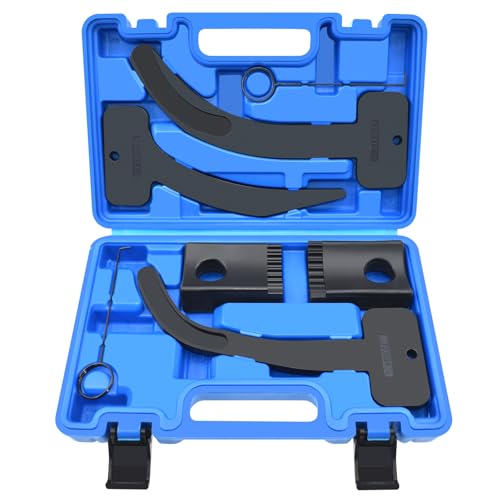
Our products are engineered with market-exclusive glass fiber-reinforced nylon composite, delivering superior durability that resists breakage. As the professional manufacturer of this innovative design in the market, we prioritize precision and longevity to meet demanding automotive repair needs.

Package Include:1x Primary Timing Chain (142 Links) Part Number 243212G111,1x Timing Tensioner Arm Part Number 24420-2C101,1x Timing Guide (Fixed) Part Number 24431-2G101,1x Oil Pump Chain Tensioner Arm Part Number 24461-2G350,1x Oil Pump Chain Guide Part Number 24471-2G350,1x Oil Pump Chain Tensioner Part Number 24470-2G350,1x Timing Chain Tensioner Part Number 24410-2G810,1x Oil Pump Chain (74 Link) Part Number 24322-2G350, 24322-2GGA0,1x Crankshaft Gear ,1x Crankshaft Gear

Updated Ford OEM 5.4L 3V Phaser Repair Kit - Phaser Sprockets,Tensioners,Guides,Chains 18pc kit
Reliability Ratings and Annual Repair Costs
Beyond the mechanical failures plaguing specific components, a thorough analysis of CX-7 reliability metrics reveals mixed performance across model years. Your cost analysis should factor in the vehicle’s 7.4/10 reliability rating from iSeeCars and 3.5/5 from RepairPal, positioning it 16th among 26 midsize SUVs. While you’ll spend an average of $470 annually on repairs—lower than the segment’s $573 average—reliability comparisons indicate higher shop visit frequency. Owners typically accumulate 11,554 annual miles during the first decade of ownership. Like the 2004 Mazda 3, early CX-7 models suffered from widespread transmission and engine problems.
The CX-7’s expected lifespan of 129,226 miles falls short of competitors, with only 5% reaching 200,000 miles. You’ll find the 2007 and 2009 models particularly problematic, requiring costly repairs up to $8,900 for turbocharger replacements. However, 2011-2012 models demonstrate markedly improved reliability metrics and reduced maintenance frequency. Like the Honda Pilot’s transmission problems in 2003 and 2005, early CX-7 models faced significant mechanical challenges.

【Gas Cap Fuel Cap Replacement】GS3L-42-250B, Check The Part Number Before Your Order, It saves you the time of buying back and forth, and also helps you save money.

【Upgrade Design】 Thickened design at the weakest stress point of the Base knob, which can effectively improve the service life of the product;

Compatible Auto List: Jeep: Grand Wagoneer (2022-2025), Grand Wagoneer L (2023-2026), Wagoneer (2022-2025), Wagoneer L (2023-2025), Mazda: CX-7 (2007-2012), RAM: 1500 (2016-2026), 1500 Classic (2019-2024), 2500 (2016-2026), 3500 (2016-2026), 4500 (2016-2023, 2025-2026), 5500 (2016-2026). Replacement for: CF11671, 6090C, LUBER-FINER: CAF1864P, Mazda: EG21-61-P11.
Common Mechanical Problems Across All Years
Despite robust engineering in many areas, CX-7 owners should watch for several critical mechanical failures that can manifest across all production years. Transmission failures represent a primary concern, with symptoms including grinding noises, erratic shifting, and delayed engagement. You’ll need to monitor for oil leaks around gaskets and timing covers, as these can escalate to severe engine damage if left unchecked. A thorough inspection of the area below the vehicle for oil stains and spots is essential for early detection.
The turbocharged models are particularly susceptible to turbocharger failures, characterized by whining sounds and sudden power loss. Additionally, timing chain issues can present as front-end clanking noises, often requiring extensive repairs. Watch for CV joint deterioration and AC compressor malfunctions, which may compromise vehicle performance. Regular diagnostic checks can help identify these issues before they lead to catastrophic failures.

Replace Part Number: EPC PWM 4F27E, 48420K-R , FN4A-EL

🌈PART NUMBER&PART NAME: 48420K-R 4F27E FN4A-EL; 4F27E Transmission Solenoid Kit.

✅Replace OE Number: 4F27-E 4F27E FN4A-EL Transmission Shift EPC PWM Solenoid. [Note]: REFURBISHED product, shipped after ensuring qualified quality. There may be some signs of wear on the surface of the product, but this does not affect functionality
Safety Recalls and Known Defects
While Mazda CX-7s from 2007-2012 exhibit overall reliable performance, these models face two critical safety recalls that demand immediate attention. The recall history reveals defective passenger airbag inflators prone to rupture, potentially propelling metal fragments into the cabin. Additionally, front suspension ball joints can corrode when exposed to water and road salt, risking separation from the lower control arm.
You’ll need to verify your VIN, as safety concerns vary by model year and geographic zone. The 2010-2012 models specifically show multiple overlapping recalls affecting steering, electrical, and brake systems. These years require thorough inspection of all safety components. According to data, only 75% of vehicles receive their necessary recall repairs despite being free of charge. Don’t delay addressing these recalls – authorized Mazda dealers will perform necessary repairs free of charge to guarantee your vehicle meets current safety standards.
The 2009 Model Year Improvements
The 2009 Mazda CX-7 underwent substantial powertrain refinements, introducing a robust 2.3L DOHC turbocharged engine that generates 244 horsepower at 5000 rpm. The engine performance benefits from optimized transmission gear ratios, with a 4.15:1 first gear and 0.69:1 overdrive sixth gear, delivering smooth power through the 6-speed automatic with Sport Shift mode. The vehicle’s 108.3-inch wheelbase provides excellent stability and ride comfort.
You’ll find enhanced structural rigidity, up 5% from previous years, paired with new dampers that improve handling dynamics. Interior upgrades include MP3 compatibility, auxiliary input, and Bluetooth integration in the Technology Package. The Grand Touring trim adds an auto-dimming rearview mirror and integrated turn signals. Safety systems received extensive updates, featuring standard stability control, enhanced ABS with EBFD, and expanded airbag coverage with occupant sensing capabilities.
Essential Maintenance and Long-Term Durability
Maintaining your CX-7’s longevity requires strict adherence to manufacturer-specified service intervals and proactive diagnostic monitoring. You’ll need to schedule air filter replacements at 60,000 miles initially, then every two years, while spark plug changes are vital at 75,000-mile intervals. For preventive maintenance, make certain oil changes occur every 7,500 miles with thorough inspections. The dashboard’s “Wrench” icon illuminates when maintenance is due.
Important to engine longevity is proper differential maintenance, especially in AWD variants, requiring oil changes every 28,100 miles. Monitor brake system components regularly, including fluid levels and pad wear. Your cooling system needs inspection every 18,750 miles, while exhaust systems require checks at 45,000-mile intervals. For harsh driving conditions, including dusty environments or frequent short trips, you’ll need to reduce these maintenance intervals accordingly to prevent premature component wear.

COMPATIBILITY — Fits 2007-2012 Mazda CX-7.

High-Quality Nylon Construction: These gears are made of high-quality nylon, better material than the original, with precise design that is wear-resistant and durable for long-lasting replacement to ensure good operation

[Vehicle Fitment]: Compatible with Mazda CX-7 2007-2009 L4 2.3L, CX-7 2010-2012 L4 2.3L (AWD), CX-7 2010-2012 L4 2.5L